Checkout Redesign & Easy Pay Installments
For a luxury fine jewelry e-commerce brand, checkout is the final and most fragile step of a considered, high-value purchase. Every extra field, unclear cost, or unfamiliar payment option is a place hesitation can creep in and a transaction can stall — especially for customers used to a quieter, more curated buying experience.
This project brought together two connected initiatives aimed at that fragility: streamlining checkout itself into a single, transparent step with Express Checkout, and giving customers a native, flexible way to pay through Easy Pay installments — extended from the product page all the way into checkout.
The Challenge
Customers arriving at checkout with full intent to buy were dropping off — some from a multi-step form that interrupted momentum with page loads, others from the friction of having to type in card details when they'd have preferred a saved wallet, and others simply because paying for a high-value item in full, in one charge, wasn't the way they wanted to pay.
Objective / Goal
Reduce checkout abandonment and grow conversion by (1) collapsing checkout into one transparent step with express, one-tap payment options, and (2) making Easy Pay installments available as a genuine payment method at every point a customer might decide to use it — not just on the product page.
Research
Data-Driven Insights
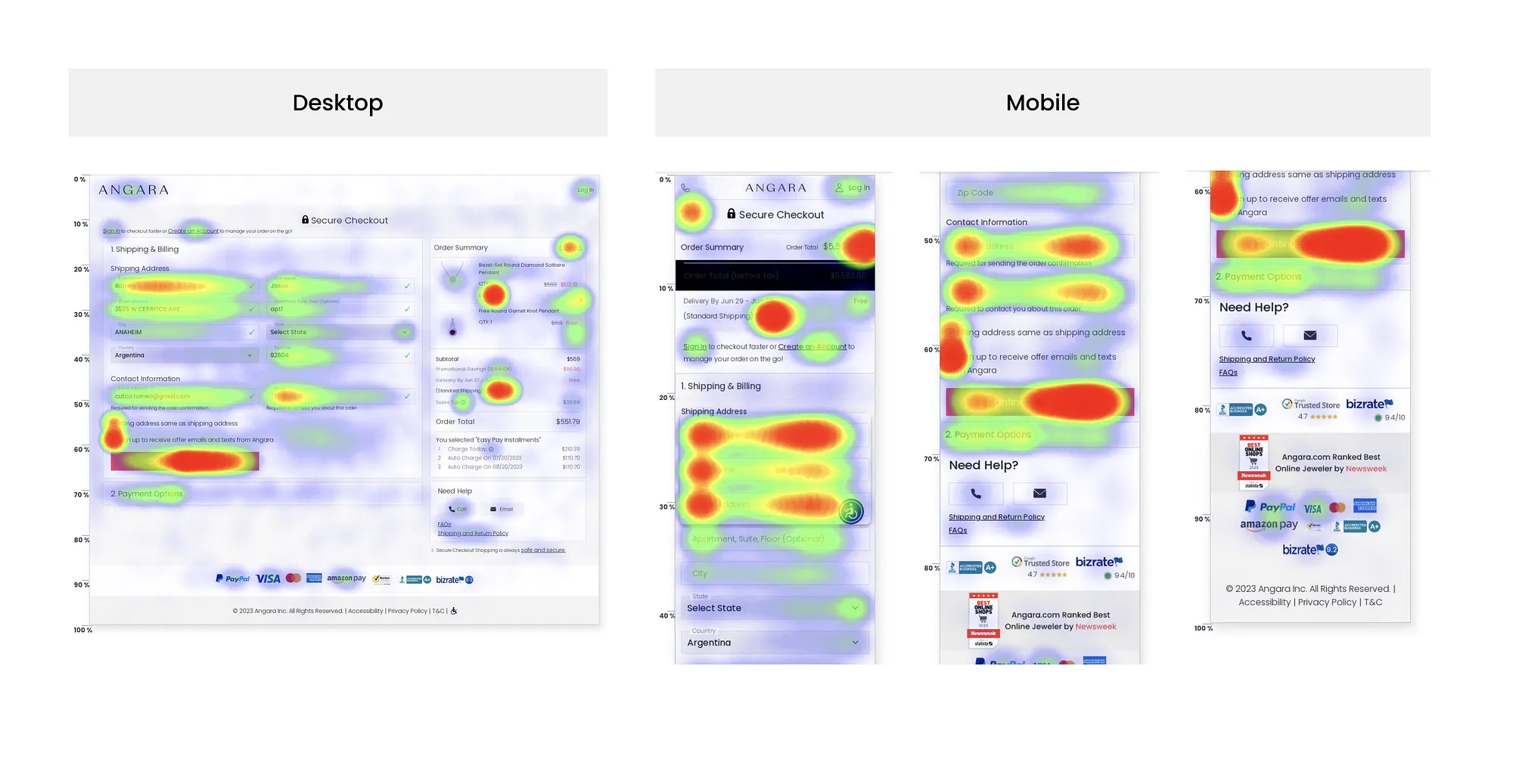
Heatmaps, analytics, and customer surveys on the existing checkout surfaced the friction points that shaped the roadmap — where attention dropped off, which fields caused hesitation, and where customers abandoned the flow before reaching payment.
Key Questions
This is what I found
Luxury customers want speed without losing exclusivity. Customers wanted a fast, secure transaction — but not one that felt generic or stripped of the brand's sense of craft and trust.
Manual form-filling was a bigger blocker than price. Customers with a stored PayPal, Amazon Pay, or Apple Pay wallet were more likely to abandon at the address/payment fields than to abandon over cost.
Budget flexibility mattered more than most other friction points. For higher-ticket items, the ability to split payment into installments was a stronger purchase driver than incremental UI polish.
Project Goals
Business Goals
Increase checkout-to-order conversion (C2O), grow revenue per visitor (RPV) and revenue per qualified visitor (RPQV), and reduce reliance on discounting as the primary conversion lever.
User Goals
Check out quickly and securely without re-entering information already saved elsewhere, understand the full cost before committing, and have a payment method that fits their budget — not just their card.
User Flow
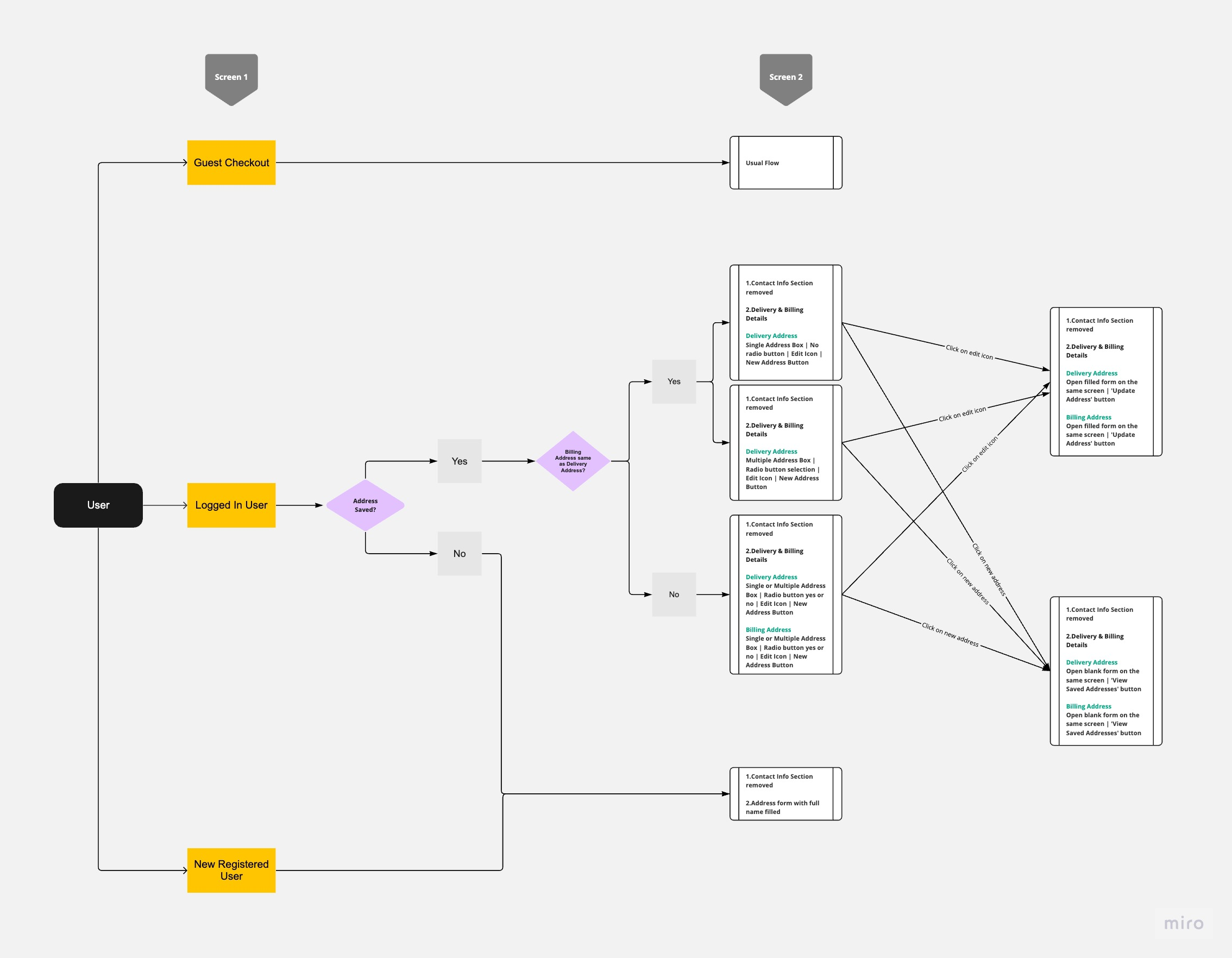
The Easy Pay flow was mapped end-to-end: from a customer first seeing an installment option on the Product Detail Page, through selecting and carrying that plan into the bag, to it appearing as a native payment method at checkout.
Low – Mid Fidelity Wireframes
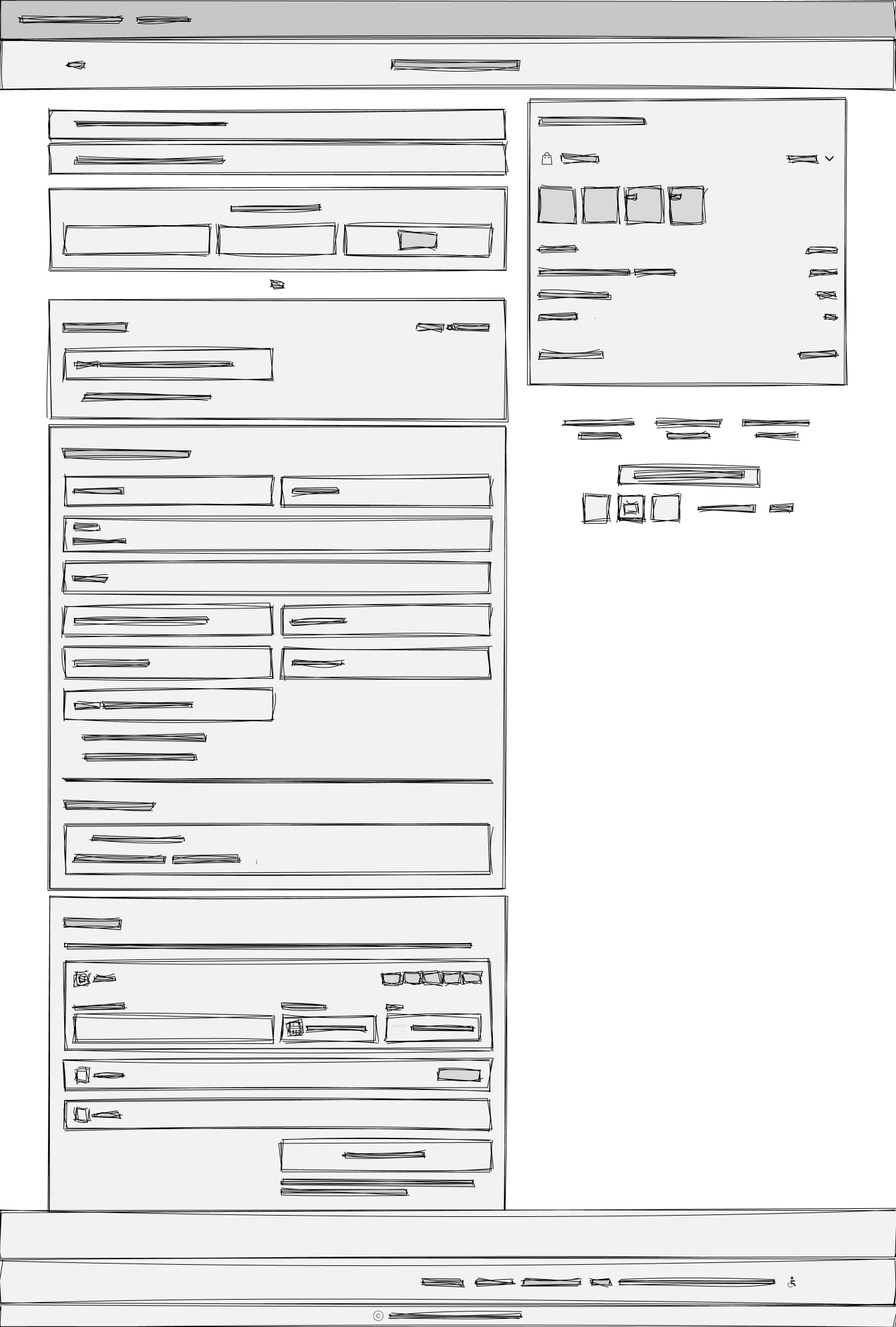
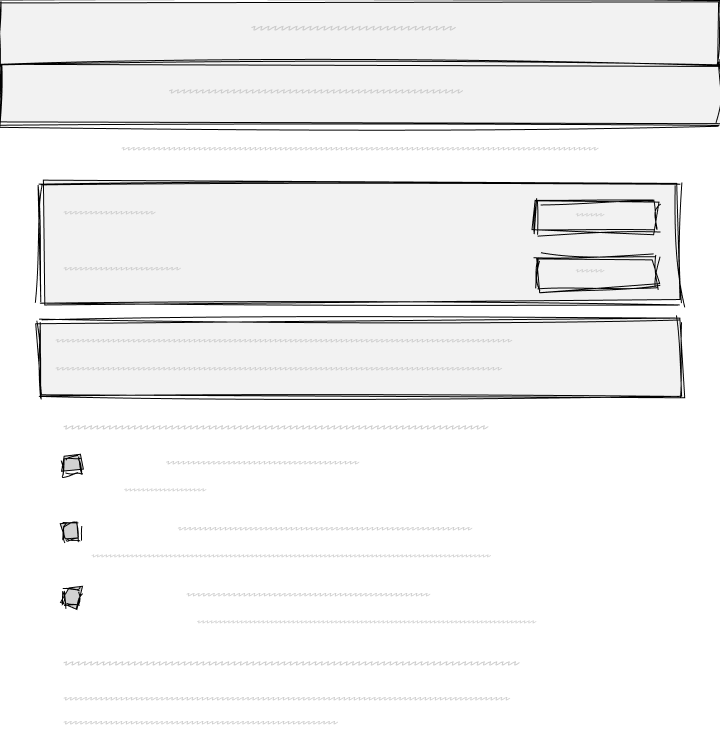
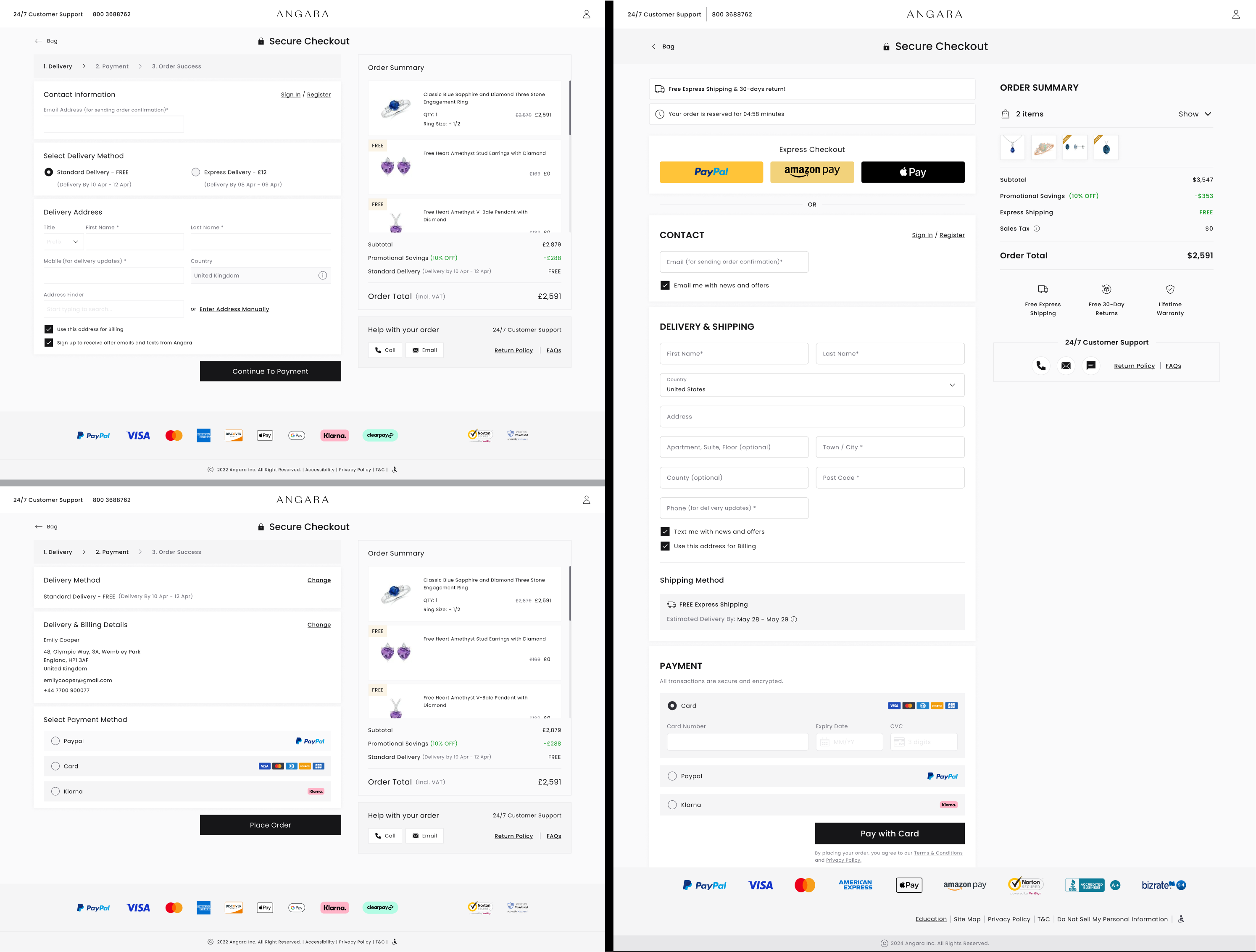
Early wireframes explored the checkout consolidation — testing how contact, delivery, shipping, and payment could sit on one scrollable page without losing clarity — and how an Easy Pay selector could sit naturally inside the existing PDP and checkout layouts.
Final Screens
One-Step Checkout & Express Checkout
Contact, delivery, shipping, and payment consolidated onto a single page, with PayPal, Amazon Pay, and Apple Pay surfaced as an Express Checkout row above the fold.
Easy Pay on the Product Detail Page
The price row surfaces "Pay as low as $X/month · Select Plan," opening a modal with the eligible installment plans based on order value.
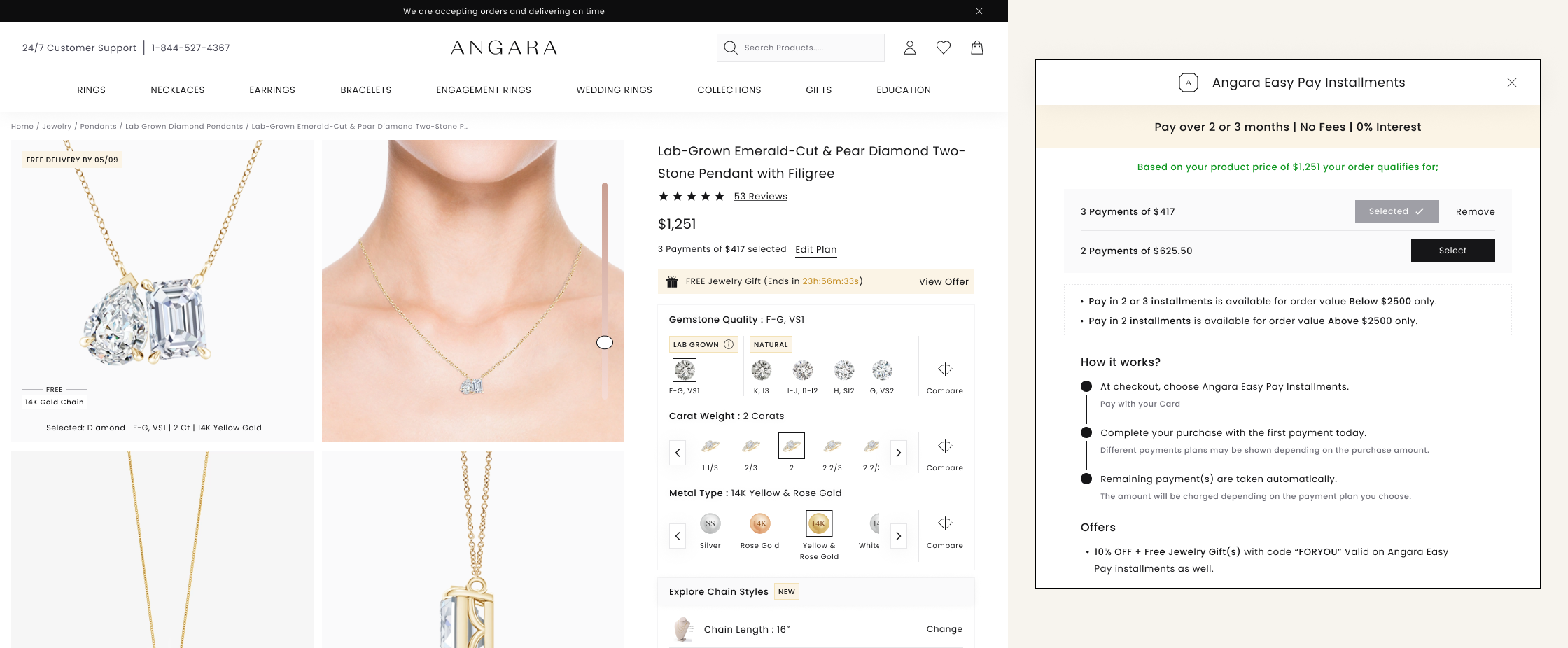
The plan a customer picks on the product page should still be there when they reach checkout — not something they have to explain to the site twice.
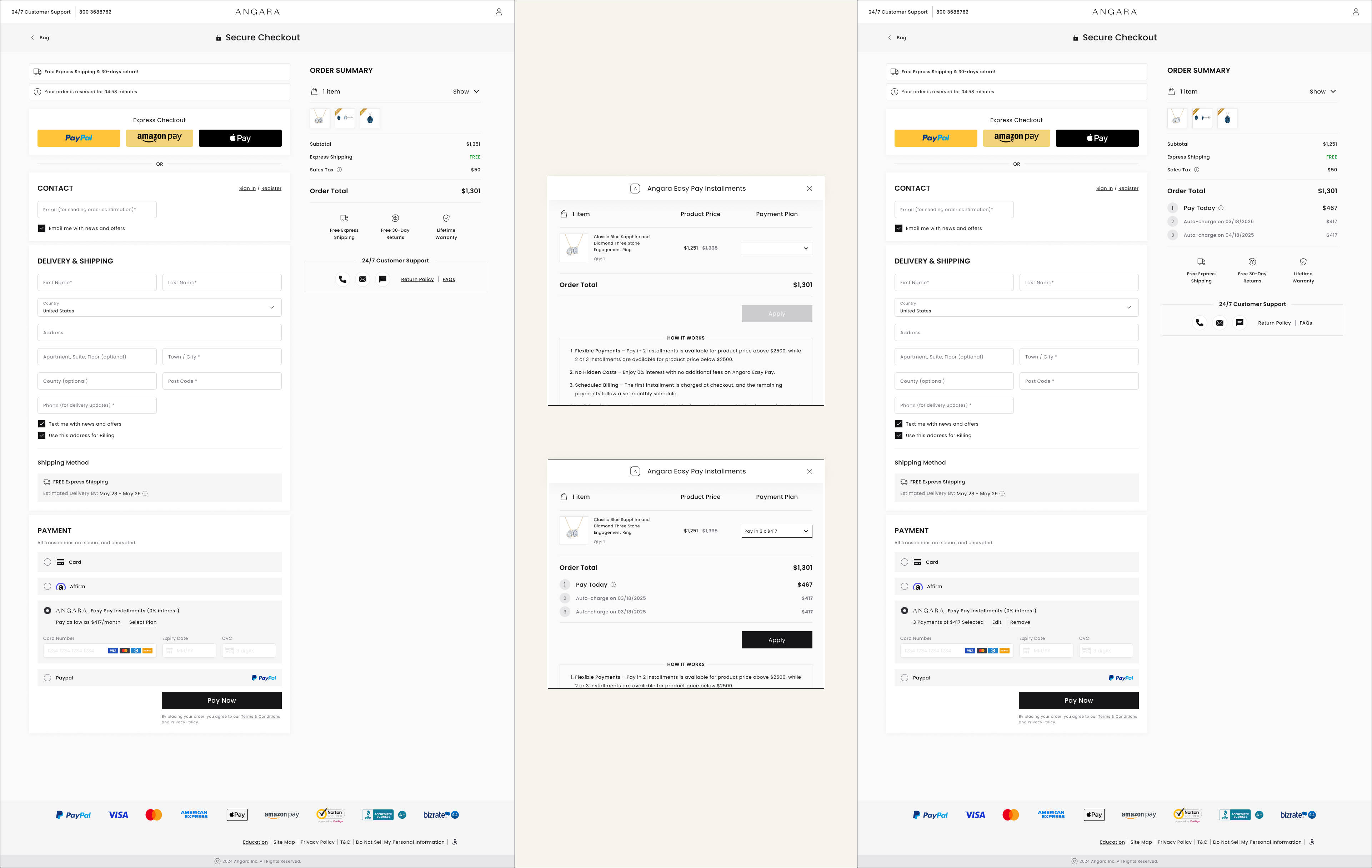
Easy Pay at Checkout
Easy Pay Installments now appears as a selectable payment method alongside Card, PayPal, and Affirm — with today's charge and future auto-charge dates shown directly against the order total.
Usability & A/B Testing
Each change — One-Step Checkout, Express Checkout, and Easy Pay — was validated through a pre/post live comparison rather than a single moderated test, given the transactional, funnel-level nature of checkout.
Metrics Tracked
C2O (Checkout-to-Order): the percentage of checkout sessions that complete an order. RPV / RPQV: revenue per visitor and per qualified visitor. Order volume: average orders per day.
Results
All figures are pre/post comparisons over the windows noted above, not controlled A/B splits.
Future Impact
- Smarter Express Checkout placement. Investigate the 1% C2O dip — test whether repositioning or resizing the Express row recovers that loss while keeping the order-volume gain.
- Expand Easy Pay eligibility signals. Surface installment eligibility earlier in the funnel (PLP, cart drawer) so more customers arrive at checkout already aware of the option.
- Personalize payment method ordering. Use purchase history to reorder Express Checkout and Easy Pay by the method each customer is statistically most likely to convert with.
- Extend installments to more categories. Explore raising the Easy Pay order-value ceiling for the highest-ticket engagement and bridal pieces.